How to Start a Korean Ramen Café in India is becoming a popular business question because Korean food, K-dramas, K-pop culture, Korean cafés, and ramen videos are attracting young Indian customers. Ramen is simple, trendy, quick to serve, and easy to promote on social media, making it a strong food business idea for cafés, kiosks, food courts, cloud kitchens, and college-area outlets.
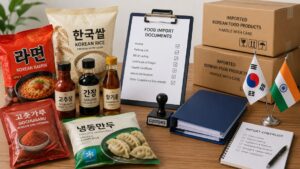
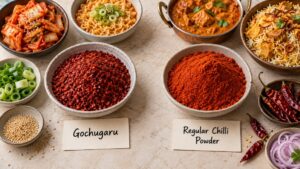
The Indian market is now more open to Korean-style food products such as ramen, kimchi, Gochugaru, Eomuk fish cake, Korean rice, sauces, and ready-to-cook meals. For entrepreneurs, How to Start a Korean Ramen Café in India is not only about selling noodles. It requires the right location, menu, suppliers, licenses, equipment, pricing, packaging, marketing, and customer experience.
BTN Insulo India Pvt. Ltd. supports Korean food businesses with WANG Korean products, HAUSCOOK ramen machines, import-export support, licensing guidance, sourcing, and India–Korea business solutions. BTN’s WANG product page includes Korean ramen, rice, Eomuk fish cake, Gochugaru, and food ingredients for cafés, restaurants, distributors, and retailers. Explore WANG Korean Food Products.
Quick Answer
To understand How to Start a Korean Ramen Café in India, begin with a simple business model, choose a good location, arrange Korean ramen products and ingredients, apply for FSSAI registration or license, plan GST and local registrations, buy suitable ramen café equipment, calculate food cost, create a short menu, and promote the café through social media and local offers.
Why a Korean Ramen Café Can Work in India
A Korean ramen café has three strong advantages: trend value, low menu complexity, and fast service. Unlike a full restaurant, a ramen café can start with a smaller menu and focus on quick preparation. This makes it easier to maintain taste consistency and manage kitchen operations.
A ramen café can work in:
- College and student areas
- Metro locations
- Shopping complexes
- Food courts
- Korean cafés
- Cloud kitchens
- Convenience-style food counters
- Office canteens
- K-pop and K-drama themed cafés
If you are researching How to Start a Korean Ramen Café in India, focus first on who your customer is. Students may prefer affordable spicy ramen bowls, while premium cafés can offer Korean-style toppings, Eomuk, kimchi, rice bowls, and combo meals.
Step 1: Choose the Right Business Model
Before investing, decide your ramen café model. The business model will decide your investment, menu, equipment, staff, licensing, and marketing.
Common models include:
1. Small Ramen Café
This model is suitable for high-footfall markets, near colleges, malls, or metro stations. You can serve ramen bowls, Korean drinks, quick snacks, and combo meals.
2. Ramen Kiosk
A kiosk is compact and works well in food courts, events, shopping complexes, and office areas. It needs limited space and a faster serving system.
3. Cloud Kitchen
A cloud kitchen can sell ramen through online delivery platforms. This model needs strong packaging, good menu photos, and delivery-friendly recipes.
4. Self-Service Ramen Counter
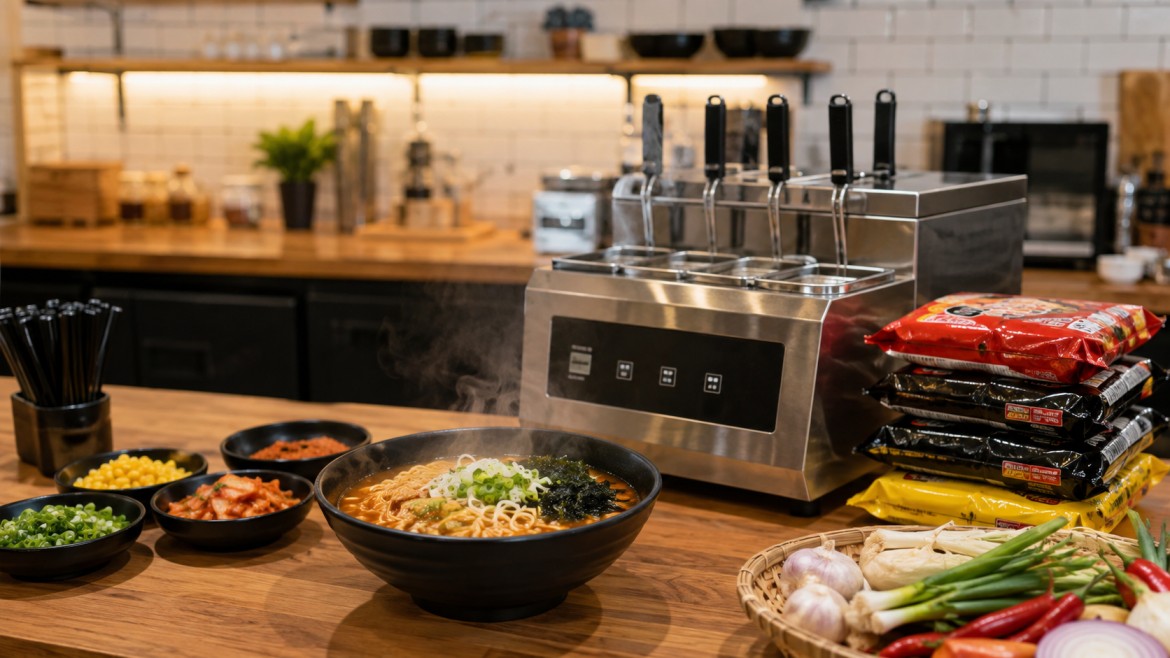
A self-service model can use smart equipment and induction bowls to create a modern ramen experience. BTN’s HAUSCOOK machine is designed for ramen, udon, fish cake, semi-prepared meals, cafés, restaurants, offices, canteens, convenience stores, and commercial food counters. View HAUSCOOK Induction Ramen Cooker.
Step 2: Select the Right Location
Location is one of the most important parts of How to Start a Korean Ramen Café in India. A trendy food concept needs visibility and footfall. The best locations are places where young people spend time, try new food, and share experiences online.
Good locations include:
- Near colleges and coaching centres
- Popular food streets
- Malls and food courts
- Metro station markets
- K-pop community areas
- Office hubs
- Tourist and shopping zones
A small café in the right location may perform better than a large restaurant in the wrong area. Before finalizing the location, check rent, nearby competition, delivery demand, seating space, kitchen ventilation, water supply, electricity load, and signage visibility.
Step 3: Plan Your Ramen Menu
A good ramen café menu should be small, easy to understand, and profitable. Do not start with too many dishes. Start with products that are easy to prepare and repeat consistently.
Suggested menu items:
- Spicy Korean ramen
- Kimchi ramen
- Chicken ramen
- Veg ramen
- Cheese ramen
- Eomuk ramen
- Tteokbokki ramen
- Korean rice bowls
- Eomuk skewers
- Korean drinks
- Ramen combo meals
WANG products can support Korean ramen café setup with ramen, rice, Eomuk, Gochugaru, and Korean food ingredients. BTN’s WANG page mentions Korean ramen options suitable for retail and food service businesses, including veg ramen, kimchi ramen, and chicken ramen.
Step 4: Arrange Korean Food Suppliers
Supplier selection is a key step in How to Start a Korean Ramen Café in India. A café needs regular supply, consistent taste, proper packaging, batch information, and food safety documents.
Before finalizing suppliers, check:
- Product quality
- Shelf life
- MOQ
- Bulk pricing
- Delivery support
- Packaging condition
- Storage requirement
- Availability of Korean ingredients
- FSSAI and labeling details
- Support for repeat orders
BTN provides Product Sourcing and Outsourcing Services including supplier identification, vendor sourcing, procurement coordination, quality inspection, OEM/ODM sourcing, packaging checks, and logistics support.
Step 5: Get the Required Licenses
Licensing is very important when learning How to Start a Korean Ramen Café in India. A ramen café is a food business, so it must follow Indian food safety and local business rules.
FSSAI License or Registration
A café, restaurant, cloud kitchen, or food counter generally needs FSSAI registration or license according to business scale and category. FSSAI’s FoSCoS portal is the official system for food business license and registration applications. Apply through FSSAI FoSCoS.
GST Registration
GST may be required depending on turnover, business structure, online delivery, and tax planning. Consult a tax expert before finalizing billing and pricing.
Shop and Establishment / Trade License
Depending on city and local rules, a café may need local municipal approval, shop registration, trade license, fire safety approval, signage permission, or health-related permissions.
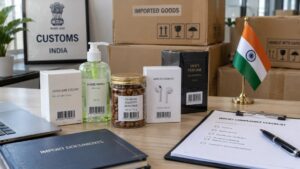
Import Compliance
If you import Korean food products directly, you may need food import clearance. FSSAI states that food imports are handled through the Food Import Clearance System, which is integrated with Customs ICEGATE under SWIFT. Check FSSAI Food Import Clearance System.
If you are importing products yourself, IEC is also important. DGFT guidance states that those who intend to import or export are required to have an Import Export Code. Visit DGFT for IEC.
BTN also offers Import and Export Solutions for IEC registration support, customs documentation, HS code guidance, supplier coordination, customs clearance, logistics, and trade compliance.
Step 6: Buy the Right Ramen Café Equipment
Equipment affects speed, consistency, hygiene, and customer experience. Basic ramen café equipment may include:
- Ramen cooker or induction machine
- Hot water system
- Work table
- Storage racks
- Refrigerator or freezer
- Sauce containers
- Bowls and serving containers
- Billing system
- Exhaust and ventilation
- Packaging material
The HAUSCOOK Induction Ramen Cooker is a smart option for quick ramen preparation. BTN’s HAUSCOOK page mentions 5-minute cooking for ramen, udon, fish cake, and instant food, hot water supply up to around 85°C, induction heating, and suitability for cafés, restaurants, convenience stores, canteens, offices, ramen counters, and self-service food zones.
For serving, compatible induction paper bowls are also useful. BTN lists HAUSCOOK induction paper bowls with 1450 ml capacity and box packing of 300 bowls, suitable for cafés, restaurants, and unmanned food systems.
Step 7: Calculate Setup Cost and Pricing
Cost planning is an important part of How to Start a Korean Ramen Café in India. Your total cost depends on location, rent, interiors, equipment, staff, licenses, inventory, packaging, branding, and marketing.
Common cost heads include:
- Shop rent and deposit
- Café interior and counter setup
- Kitchen equipment
- HAUSCOOK machine or cooking system
- Initial Korean food stock
- FSSAI and local licenses
- Staff salary
- Packaging and disposable bowls
- Electricity and water
- Branding and menu design
- Social media marketing
Pricing should include food cost, packaging, delivery charges, staff cost, rent, utilities, wastage, and profit margin. Create combos to increase average order value, such as ramen with drink, ramen with Eomuk, ramen with rice bowl, or student combo meals.
Step 8: Design the Customer Experience
A Korean ramen café is not only about food. It is about experience. Customers should feel that they are trying something trendy, new, and shareable.
Simple experience ideas:
- Korean-style menu names
- Ramen wall or product display
- K-pop inspired ambience
- Quick self-service counter
- Clear spice-level options
- Combo meal posters
- QR menu
- Instagram-friendly plating
- Student offers
- Ramen challenge campaigns
When planning How to Start a Korean Ramen Café in India, think about repeat customers. The menu should be affordable enough for regular visits and attractive enough for social sharing.
Step 9: Promote Your Ramen Café
Marketing should start before opening. Build curiosity through Instagram reels, Google Business Profile, local SEO, food influencer visits, soft launch offers, student discounts, and Korean food education posts.
Useful content ideas:
- “Trying Korean ramen for the first time”
- “Spicy ramen challenge”
- “What is Eomuk?”
- “Kimchi ramen vs spicy ramen”
- “Korean café experience in India”
- “Ramen under budget”
- “Behind the counter ramen preparation”
Local SEO is also important. Add your café to Google Business Profile, use location keywords, collect reviews, upload food photos, and keep opening hours updated.
Common Mistakes to Avoid
Many cafés fail because they follow the trend without planning operations. Avoid these mistakes:
- Starting with too many dishes
- Choosing location only because rent is low
- Ignoring FSSAI license requirements
- Not calculating food cost
- Using poor-quality packaging
- Not training staff
- Keeping inconsistent spice levels
- Not planning supplier backup
- Ignoring expiry and inventory control
- Not promoting through local SEO and social media
A good setup balances trend, taste, speed, compliance, and profitability.
How BTN Can Help
BTN Insulo India Pvt. Ltd. is an India–Korea business and trade company founded in 2001. BTN supports consulting, import-export, company setup, sourcing, regulatory guidance, brand-building, and Korean food product distribution. About BTN Insulo.
For businesses researching How to Start a Korean Ramen Café in India, BTN can support with:
- WANG Korean ramen and ingredients
- Eomuk fish cake supply
- Gochugaru and Korean food products
- HAUSCOOK ramen machine
- Induction paper bowls
- Supplier sourcing
- Import-export documentation
- FSSAI, IEC, LMPC, and compliance guidance
- Café setup and market-entry support
FAQs
1. How to Start a Korean Ramen Café in India with low investment?
Start with a small menu, compact location, limited staff, reliable ramen products, basic equipment, FSSAI registration, and strong social media promotion.
2. What licenses are needed for a Korean ramen café?
A ramen café usually needs FSSAI registration or license, GST if applicable, shop/trade registration, and local permissions depending on the city.
3. Which products are best for a ramen café?
Ramen, Korean rice, Eomuk fish cake, Gochugaru, sauces, kimchi-style ingredients, drinks, and disposable serving bowls are useful starting products.
4. Can I use a ramen machine for café operations?
Yes. A ramen machine can improve consistency and speed. HAUSCOOK is designed for ramen, udon, fish cake, instant food, cafés, restaurants, canteens, offices, and self-service food zones.
5. Can BTN help with Korean ramen café setup?
Yes. BTN can support Korean food product supply, HAUSCOOK ramen machine, sourcing, import-export documentation, licensing guidance, and India market entry support.
Conclusion
How to Start a Korean Ramen Café in India is a practical business idea for entrepreneurs who want to enter the growing Korean food category. The concept can work well in student markets, malls, food courts, cafés, cloud kitchens, and quick-service food counters.
To build a successful ramen café, focus on product quality, reliable suppliers, FSSAI compliance, menu simplicity, equipment planning, cost control, and social media marketing. With the right setup, Korean ramen can become a profitable and attractive food business in India.