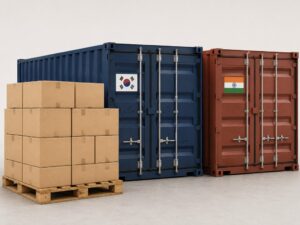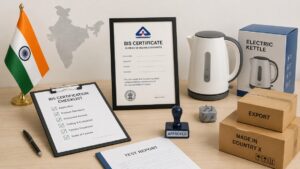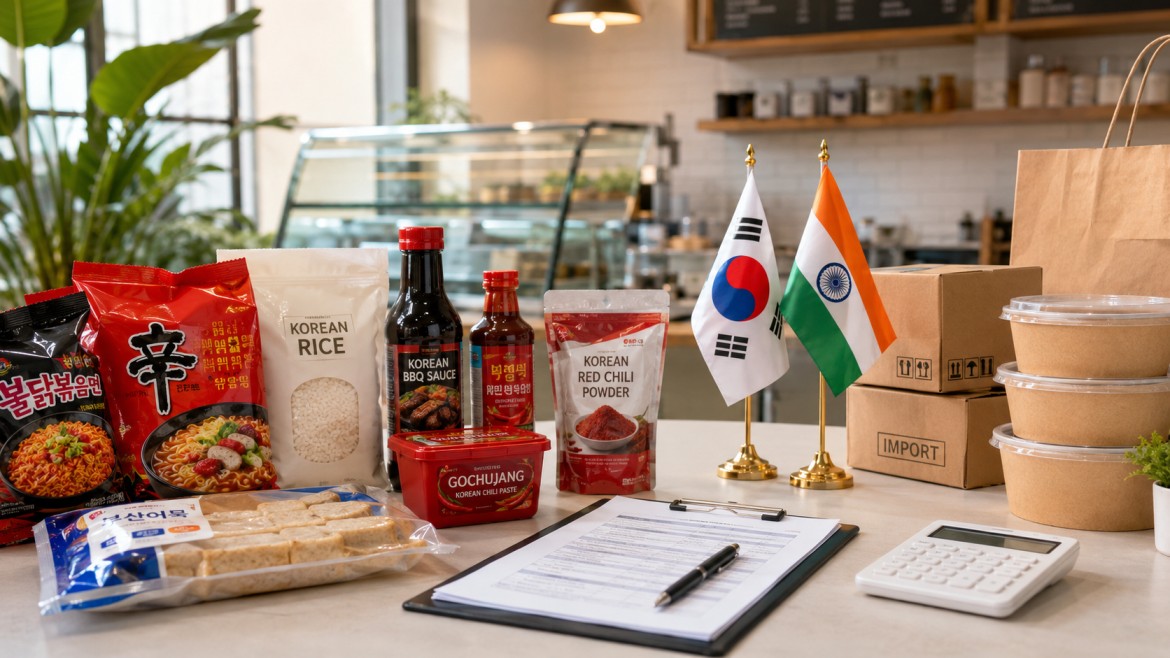
Korean Food Business in India is growing rapidly because of K-dramas, K-pop, Korean ramen, Korean cafés, street food videos, and changing food habits among young customers. From ramen bowls and tteokbokki to gimbap, Korean sauces, rice, kimchi, and Eomuk fish cake, Korean cuisine is becoming more familiar to Indian consumers.
For entrepreneurs, restaurant owners, café operators, retailers, cloud kitchens, and food distributors, Korean Food Business in India can be a strong opportunity. But starting this business requires more than adding ramen packets to a shelf or launching a small menu. You need the right products, reliable suppliers, food licenses, import documents, packaging compliance, pricing strategy, storage planning, and customer positioning.
This guide explains the complete setup process in a simple way so businesses can plan Korean food products, supplier sourcing, licenses, and operations with more clarity.
Why Korean Food Is a Growing Business Opportunity
Korean food has a unique advantage in India because it connects taste, trend, and experience. Young customers are curious about Korean ramen, spicy sauces, kimchi, corn dogs, rice bowls, and café-style Korean meals. At the same time, restaurants and retailers are looking for products that can create a fresh category and attract repeat customers.
The opportunity is not limited to restaurants. Korean food products India can work for:
- Cafés and QSR outlets
- Korean restaurants
- Cloud kitchens
- Supermarkets and retail stores
- Food distributors
- Importers and wholesalers
- Online grocery sellers
- College-area food counters
- Food courts and kiosks
- Ramen cafés and self-cooking counters
BTN Insulo India Pvt. Ltd. supports Korean food opportunities through its WANG product range, including ramen, rice, Eomuk fish cake, Gochugaru, and Korean food ingredients for cafés, restaurants, distributors, and retailers. Explore BTN WANG Products. BTN’s website highlights that WANG products are suitable for retail and food service and are backed by BTN’s supply support for distributors.
Best Korean Food Products to Start With
Choosing the right products is the first step. A good product mix should be easy to understand, easy to serve, and easy to sell. For beginners, it is better to start with products that already have awareness among Indian customers.
1. Korean Ramen
Ramen is usually the easiest entry point. It works well for cafés, retail shelves, cloud kitchens, food courts, college-area counters, and supermarkets. A Korean ramen business can start with packaged ramen, cooked ramen bowls, or a self-cooking ramen concept.
2. Korean Rice and Rice-Based Meals
Korean rice is important for gimbap, bibimbap, fried rice bowls, sushi-style items, and Korean meal combos. Premium sticky rice, sushi rice, white rice, and black rice can help restaurants maintain authentic texture and taste.
3. Eomuk Fish Cake
Eomuk is useful for Korean soups, tteokbokki, skewers, hot pots, and street food dishes. BTN’s Eomuk fish cake page explains that the product is suitable for restaurants, cafés, retailers, distributors, and Korean food lovers. View BTN Eomuk Fish Cake.
4. Gochugaru and Korean Sauces
Gochugaru, Korean chilli powder, and Korean sauces are important for creating authentic flavour. They can be used in ramen, kimchi, tteokbokki, spicy rice bowls, marinades, and fusion recipes.
5. Korean Snacks and Ready-to-Cook Items
Snacks, instant foods, sauces, frozen products, and ready-to-cook items are easier for retail stores and online sellers. These products can help test customer demand before expanding into a full restaurant or café setup.
How to Find Reliable Korean Food Suppliers
A reliable Korean food supplier India should provide consistent product quality, proper packaging, clear batch information, documentation support, and stable supply. Many businesses face problems when they choose suppliers only by price without checking product quality, shelf life, storage requirements, and compliance documents.
Before finalizing a supplier, check:
- Product quality and taste consistency
- Shelf life and batch details
- FSSAI-related details, if applicable
- Packaging and labeling support
- Bulk supply capacity
- MOQ and payment terms
- Cold chain or storage requirements
- Delivery timeline
- Import documentation support
- Distributor or wholesale pricing
BTN provides Product Sourcing & Outsourcing support for supplier identification, vendor sourcing, procurement coordination, quality inspection, packaging checks, and sourcing support. BTN’s sourcing page describes support across vendor identification, OEM/ODM sourcing, procurement coordination, negotiation, and quality inspection.
Licenses Required for a Korean Food Business
Food licensing depends on your business type. A restaurant, café, importer, distributor, retailer, cloud kitchen, or packaged food seller may need different registrations and compliance support.
1. FSSAI License or Registration
FSSAI license or registration is one of the most important requirements for food businesses in India. FSSAI’s FoSCoS portal is used by Food Business Operators to apply for license or registration and track applications. Visit FSSAI FoSCoS.
For a Korean restaurant setup, cloud kitchen, café, food distributor, or retailer, the correct FSSAI category should be checked before starting operations.
2. Food Import Clearance
If you are importing Korean food products, food import compliance becomes important. FSSAI states that food imports are processed through the Food Import Clearance System, which is integrated with Customs ICEGATE under SWIFT. Check FSSAI Food Import Clearance.
Imported food articles may be subject to risk-based sampling and testing through the official process. This is important for ramen, sauces, rice, fish cake, frozen food, spices, and other Korean ingredients.
3. Importer Exporter Code
For commercial food import, the business may need an Importer Exporter Code. IEC is used for import-export documentation, customs clearance, and international trade transactions. You can apply or check details through the official DGFT portal.
4. Legal Metrology and Labeling Compliance
If you are selling pre-packaged food products, packaging and label declarations must be checked carefully. The Department of Consumer Affairs explains that pre-packaged commodities need declarations such as manufacturer, packer or importer details, country of origin for imported products, common name, net quantity, month and year of manufacture, best before or use by date, MRP, consumer care details, and unit sale price where applicable. Read Legal Metrology Overview.
5. GST, Shop License and Local Registrations
Depending on the state, city, and business model, a café, restaurant, retail store, or warehouse may also need GST registration, trade license, shop and establishment registration, fire safety approval, signage permission, and local municipal approvals.
BTN supports businesses with licensing and certification services for Indian regulatory requirements, including FSSAI, LMPC, BIS, EPR, CDSCO, IEC, and other compliance areas. View BTN Licensing & Certification Services.
Setup Guide for Korean Food Entrepreneurs
Starting Korean Food Business in India becomes easier when the setup is planned step by step.
Step 1: Select Your Business Model
First, decide whether you want to operate as a restaurant, café, cloud kitchen, retail store, distribution business, or import business. Each model needs different investment, licenses, staff, storage, and marketing.
For example, a Korean ramen café needs equipment, seating, menu design, and fast service. A food distributor needs warehousing, B2B pricing, logistics, and retailer connections.
Step 2: Finalize Your Product Menu
A simple menu is better in the beginning. You can start with ramen, rice bowls, Korean snacks, Eomuk dishes, sauces, and beverages. For retail, start with ramen packets, rice, sauces, chilli powder, ready-to-cook products, and frozen items.
Step 3: Plan Equipment and Kitchen Setup
Food service businesses need cooking equipment, storage units, packaging material, work counters, utensils, induction systems, and hygiene setup. For ramen-focused businesses, BTN also provides the Hauscook Induction Ramen Cooker, a machine positioned for cafés, restaurants, food courts, convenience stores, offices, canteens, kiosks, and ramen counters.
Step 4: Arrange Suppliers and Inventory
Once your menu is fixed, select products that can be supplied regularly. Keep stock planning simple in the beginning. Track expiry dates, batch numbers, packaging condition, and fast-moving items.
Step 5: Calculate Cost and Pricing
Your pricing should include product cost, import cost if applicable, packaging, kitchen cost, rent, staff salary, electricity, delivery commission, marketing, wastage, and profit margin. For imported items, also include customs duty, clearance cost, storage, and inland logistics.
Step 6: Set Up Compliance and Documentation
Before launch, complete the required FSSAI, GST, trade license, import documentation, labeling compliance, and product approvals. Wrong or incomplete documentation can delay business operations.
Step 7: Build Customer Attraction
Korean food sells well when the experience is clear. Use product displays, small tasting menus, Korean-style visuals, combo meals, quick ramen bowls, student offers, K-drama-inspired menu names, and educational content explaining dishes like kimchi, Eomuk, tteokbokki, gimbap, and Gochugaru.
Importing Korean Food Products into India
If your plan includes importing products directly, you need a stronger compliance and logistics process. Importing food products involves supplier verification, invoice, packing list, bill of lading or airway bill, certificate of origin, product labels, FSSAI import license, shelf-life check, and customs clearance.
BTN offers Import & Export Solutions covering import-export documentation, IEC registration support, customs clearance documentation, trade compliance, duty and tax guidance, supplier coordination, and shipment support. The page also mentions BTN’s India–Korea trade expertise for cross-border operations.
A planned import process helps avoid shipment delays, stock damage, labeling problems, and unnecessary compliance issues.
Common Mistakes to Avoid
Many new businesses enter the Korean food category only because it is trending. But food business success needs planning, not only trend value.
Avoid these mistakes:
- Buying products without checking demand
- Selecting suppliers only by low price
- Ignoring FSSAI license requirements
- Importing food without checking shelf life
- Not checking label declarations
- Overloading the menu too early
- Not calculating landed cost
- Ignoring storage and expiry control
- Not training staff on Korean product knowledge
- Running promotions without stable supply
A successful Korean restaurant setup or retail food business should balance trend, compliance, quality, and repeat customer demand.
How BTN Insulo India Pvt. Ltd. Can Help
BTN Insulo India Pvt. Ltd. is an India–Korea business and trade company founded in 2001. The company supports consulting, import-export, company setup, sourcing, regulatory guidance, and Korean food product distribution. About BTN Insulo.
For Korean Food Business in India, BTN can support with:
- Korean food product supply
- WANG ramen, rice, Eomuk, Gochugaru, and ingredients
- Supplier sourcing and coordination
- Import-export documentation
- Food import compliance support
- FSSAI, LMPC, IEC, and licensing guidance
- Ramen machine and food service setup support
- Business consulting and India market entry guidance
Businesses planning company registration, office setup, staffing, accounting, or operational support can also explore BTN’s Company Setup & Support Services.
FAQs
1. Is Korean food business profitable in India?
It can be profitable if the business has the right location, product quality, pricing, supplier network, licenses, and marketing strategy. Ramen, rice bowls, sauces, snacks, and Korean street food products have strong customer curiosity.
2. Which products are best for starting a Korean food business?
Ramen, Korean rice, sauces, Gochugaru, Eomuk fish cake, ready-to-cook snacks, and popular Korean ingredients are good starting products.
3. Do I need an FSSAI license for a Korean café?
Yes, food businesses such as cafés, restaurants, cloud kitchens, retailers, and distributors generally need FSSAI license or registration based on their business type and scale.
4. Can I import Korean food products directly?
Yes, but you must check IEC, FSSAI import compliance, product labels, shelf life, customs clearance, and required documents before importing.
5. Can BTN help with Korean food suppliers?
Yes, BTN supports Korean food product supply, sourcing, import-export documentation, compliance guidance, and market entry support for Indian businesses.
Conclusion
Korean Food Business in India is a promising category for cafés, restaurants, retailers, distributors, importers, and entrepreneurs. Korean ramen, rice, Eomuk, sauces, spices, and ready-to-cook products can attract customers when combined with the right setup, licensing, supplier planning, and marketing.
To build a successful business, focus on product selection, reliable suppliers, FSSAI compliance, labeling rules, import documentation, storage, pricing, and customer experience. With proper planning, Korean food can become a strong business category in the Indian market.