Introduction
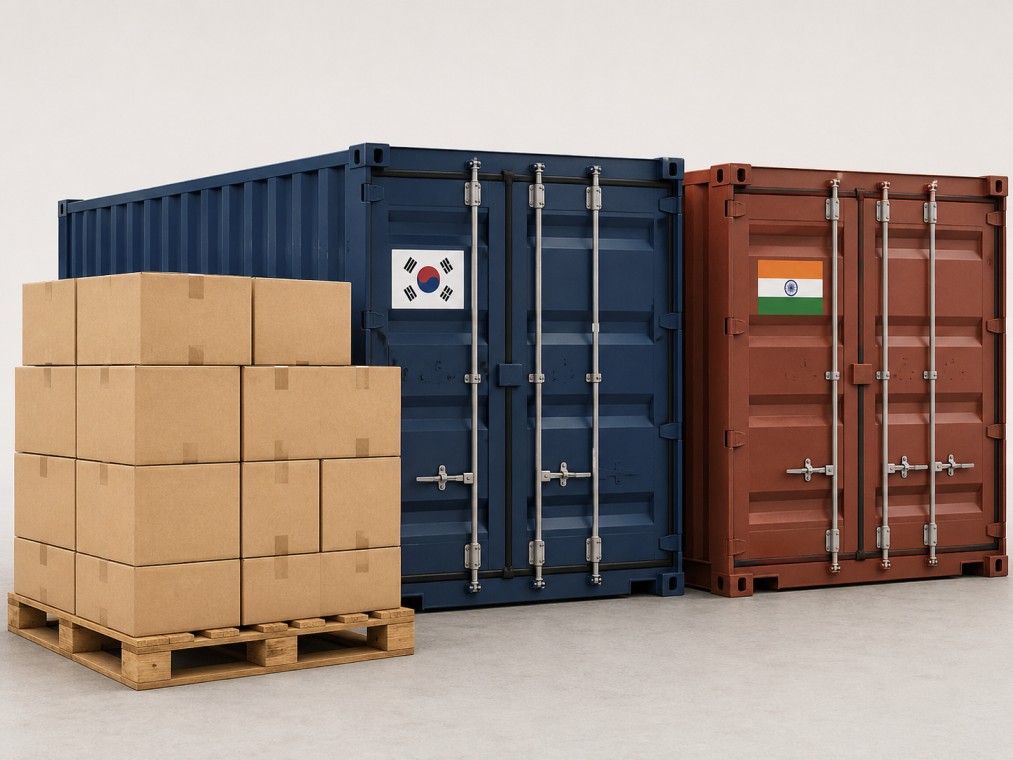
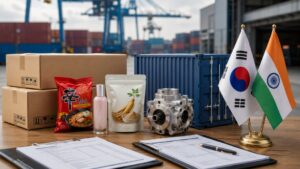
South Korea is one of the most trusted countries for high-quality products, advanced technology, food products, machinery, cosmetics, electronics, packaging materials, and industrial goods. Many Indian businesses want to import Korean products because of their quality, innovation, and growing demand in the Indian market.
However, importing products from South Korea to India is not only about finding a supplier and placing an order. Importers must understand product selection, supplier verification, Importer Exporter Code, HS code, customs duty, documentation, product compliance, labeling, licensing, logistics, and Indian market requirements.
In this guide, BTN Insulo India Pvt. Ltd. explains the complete process of importing products from South Korea to India in a simple and practical way.
Quick Answer
To import products from South Korea to India, an Indian business generally needs an Importer Exporter Code, correct HS code classification, supplier documents, a commercial invoice, a packing list, a bill of lading or an airway bill, customs clearance, applicable product licenses, duty payment, and logistics support. Food, electronics, cosmetics, machinery, and regulated products may require additional approvals before import.
Why Import Products from South Korea to India?
South Korea is known for strong manufacturing, quality control, modern packaging, food innovation, beauty products, electronics, machinery, and industrial technology. Indian buyers often prefer Korean products because they offer a balance of quality, branding, and market appeal.
Some popular Korean product categories in India include:
- Korean food products
- Korean ramen and sauces
- Rice, noodles, and food ingredients
- Cosmetics and skincare products
- Electronics and electrical products
- Machinery and automation equipment
- Kitchen and café equipment
- Packaging material
- Industrial components
- Lifestyle and consumer products
For Indian businesses, importing Korean products can open opportunities in retail, distribution, cafés, restaurants, supermarkets, e-commerce, manufacturing, and B2B supply.
Step-by-Step Process to Import from South Korea to India
1. Select the Right Product
The first step is to clearly decide which product you want to import. Before finalizing the product, check whether it has good demand in India, whether the pricing is competitive, and whether it needs any special license or certification.
For example, importing Korean ramen or food ingredients may require food-related compliance, while electronics may require BIS or other technical certification depending on the product category.
Before importing, check:
- Product demand in India
- Competition and selling price
- Import duty and landed cost
- Shelf life, if it is a food product
- Packaging and labeling requirements
- Required Indian licenses or certifications
- Minimum order quantity from the supplier
- Storage and warehousing needs
A proper product selection process can reduce risk and improve business profitability.
2. Find and Verify a Korean Supplier
Finding a supplier is easy, but finding a reliable supplier is the most important part of the import process. Many businesses face problems because they finalize suppliers without proper background checks.
Before making payment, verify:
- Company registration details
- Export experience
- Product certificates
- Factory or brand authorization
- Product quality standards
- Previous export records
- MOQ and pricing terms
- Payment terms
- Packaging and labeling support
- Ability to provide documents for Indian customs
BTN can support Indian businesses in Korean supplier sourcing, communication, negotiation, documentation, and product coordination.
3. Get Importer Exporter Code
Importer Exporter Code, commonly called IEC, is a key business identification number required for import and export activities in India. Without IEC, most businesses cannot complete commercial import or export activities.
IEC is generally required for:
- Importing goods into India
- Exporting goods from India
- Customs clearance
- International trade documentation
- Import-export business operations
Indian businesses should apply for an IEC before starting the import process. If you already have IEC, make sure the details are active and updated.
4. Identify the Correct HS Code
HS code is used to classify products for customs duty and import regulations. The same product category can have different duty rates and compliance requirements depending on its exact classification.
Wrong HS code selection can create problems such as:
- Incorrect customs duty calculation
- Shipment delay
- Extra penalty or clarification
- Wrong license requirement
- Difficulty in customs clearance
For example, food products, sauces, noodles, machinery, cosmetics, and electronics all have different HS codes and import conditions. Before finalizing the import order, the HS code should be checked carefully.
5. Check Import Duty and Landed Cost
Many new importers only check the supplier price and forget to calculate the full landed cost. This can create pricing problems after the shipment arrives in India.
Landed cost may include:
- Product cost
- International freight
- Insurance
- Customs duty
- IGST
- Port charges
- Customs handling charges
- Clearance charges
- Inland transportation
- Warehousing cost
- Testing or certification cost, if applicable
A product may look cheap at the supplier price, but after freight, duty, taxes, and handling charges, the final cost may become much higher. Always calculate landed cost before confirming the order.
6. Check Product License and Certification Requirements
Some products can be imported with basic documentation, while others need approval, registration, certification, or testing before import or sale in India.
Common compliance areas include:
Food Products
Imported food products may need FSSAI compliance, food import clearance, labeling checks, ingredient details, shelf life details, and other food safety documentation.
Electronics and Electrical Products
Certain electronics and electrical products may need BIS registration or certification before they can be imported or sold in India.
Cosmetics and Personal Care Products
Cosmetics may need registration, labeling compliance, ingredient details, and other regulatory documents.
Packaged Goods
Pre-packaged imported products may need labeling compliance such as importer details, MRP, net quantity, country of origin, manufacturing details, and other mandatory declarations.
Machinery and Industrial Goods
Machinery imports may require technical documents, an invoice, packing details, safety information, and installation-related support depending on the product type.
This step is very important because non-compliant products can get delayed, rejected, or held during clearance.
7. Prepare Import Documents
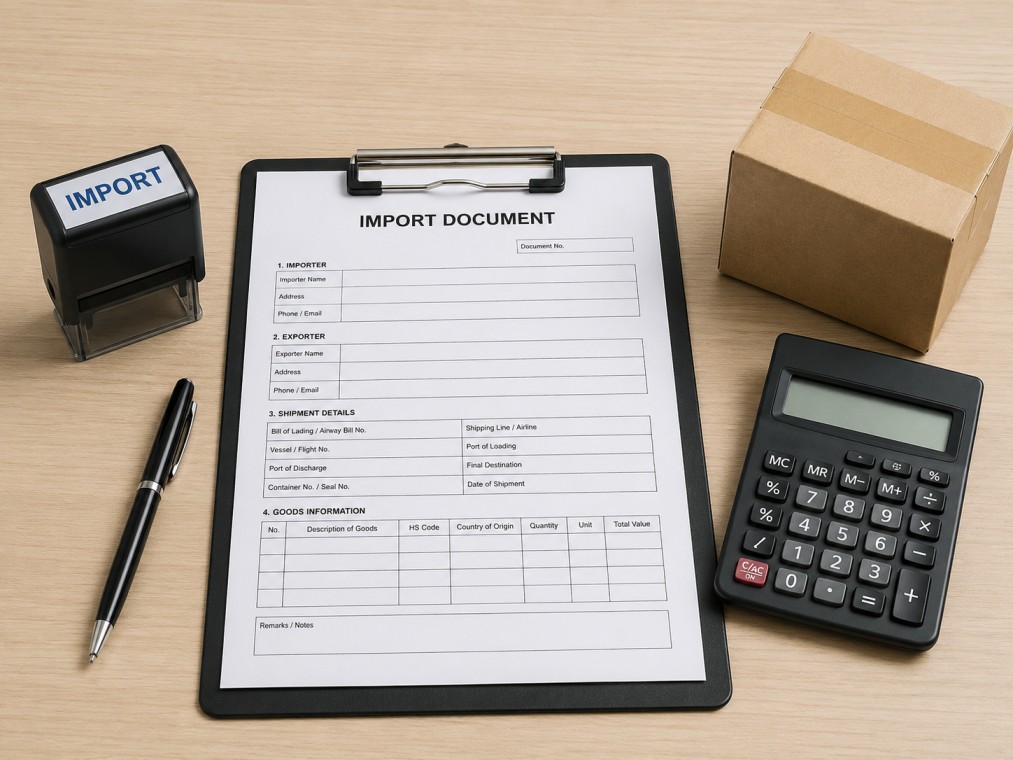
Proper documentation is the backbone of a smooth import process. Missing or incorrect documents can delay customs clearance.
Common import documents include:
- Commercial invoice
- Packing list
- Bill of lading or airway bill
- Certificate of origin
- Importer Exporter Code details
- Insurance certificate, if applicable
- Product specification sheet
- Test certificate, if required
- FSSAI or BIS documents, if applicable
- Purchase order
- Sales contract
- Freight documents
- Customs declaration documents
The exact document list depends on product category, shipping mode, country of origin, and Indian regulatory requirements.
8. Choose Shipping Method
Products from South Korea to India can be imported by sea freight or air freight.
Sea Freight
Sea freight is suitable for bulk products, heavy goods, large quantity shipments, food products, machinery, and commercial imports where time is not extremely urgent.
Air Freight
Air freight is faster but more expensive. It is suitable for urgent shipments, samples, premium products, small parcels, high-value goods, or time-sensitive items.
The right shipping method depends on:
- Product type
- Quantity
- Weight and volume
- Urgency
- Cost calculation
- Shelf life
- Buyer requirement
- Port or airport availability
9. Customs Clearance in India
After the shipment reaches India, customs clearance is required. The importer or customs broker must submit the required documents, file the necessary declaration, pay applicable duties, and complete the clearance process.
Customs clearance usually includes:
- Document verification
- Product classification
- Duty calculation
- Regulatory checks
- Assessment
- Payment of duty and taxes
- Inspection, if required
- Clearance approval
- Delivery order and transportation
If the product is regulated, clearance may also involve testing, sampling, or approval from the concerned authority.
10. Warehousing and Distribution
After customs clearance, the goods need to be moved to a warehouse, store, distributor location, restaurant, café, factory, or customer location.
For imported products, especially food products, warehousing must be planned carefully. Check:
- Storage temperature
- Shelf life
- Inventory planning
- Batch details
- Expiry date management
- Product labeling
- Distribution network
- Retail or wholesale channel
Good warehousing and distribution planning help reduce product damage, expiry loss, and delivery delays.
Common Mistakes Importers Should Avoid
Many importers face losses because they skip important checks before placing the order.
Avoid these mistakes:
- Importing without checking Indian compliance
- Selecting a supplier only based on low price
- Not calculating landed cost
- Using the wrong HS code
- Not checking FSSAI, BIS, or labeling requirements
- Making an advance payment without supplier verification
- Importing food products without shelf life planning
- Not confirming packaging details
- Not preparing documents properly
- Not checking customs duty before shipment
A professional import-export consultant can help reduce these risks.
How BTN Can Help with South Korea to India Imports
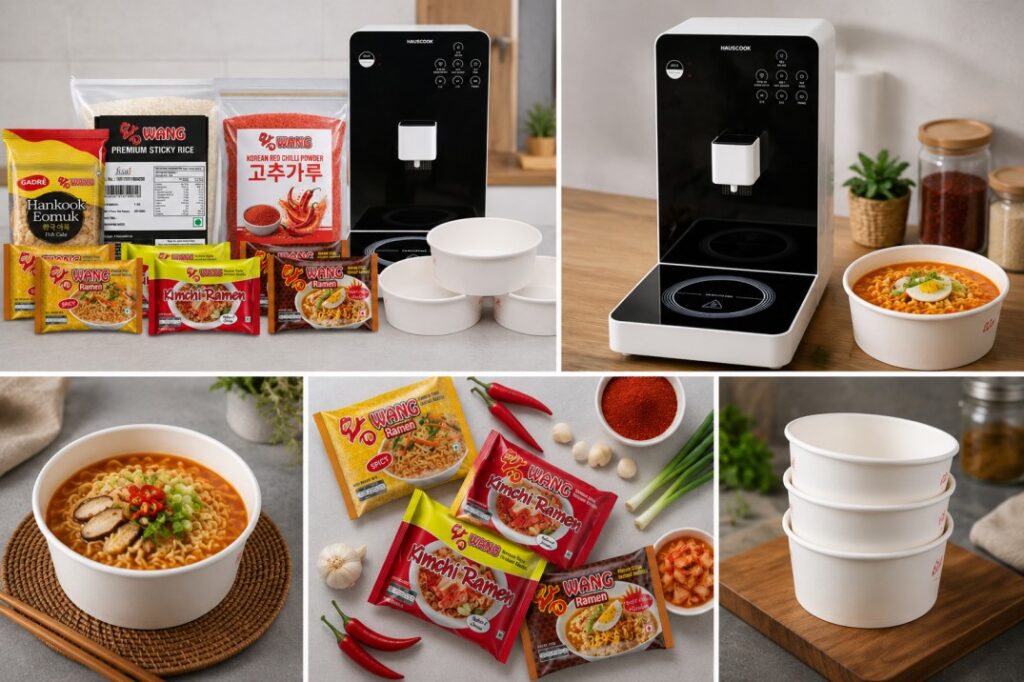
BTN Insulo India Pvt. Ltd. has experience in India–Korea business consulting, import-export support, product sourcing, documentation, compliance, and Korean product distribution.
BTN can support businesses with:
- Korean supplier sourcing
- Product selection support
- Supplier communication
- Import documentation guidance
- HS code and duty coordination
- Product compliance support
- FSSAI, BIS, LMPC, IEC, and certification guidance
- Customs clearance coordination
- Logistics and shipment support
- Warehousing and distribution support
- Korean food product sourcing
- Business setup and market entry support
Whether you are an Indian importer, Korean manufacturer, distributor, café owner, retailer, or business investor, BTN can help you build a smoother India–Korea trade process.
Who Should Read This Guide?
This guide is useful for:
- Indian importers
- Korean exporters
- Café and restaurant owners
- Korean food distributors
- Supermarket and retail buyers
- E-commerce sellers
- Machinery importers
- Cosmetic and skincare importers
- Business owners planning India–Korea trade
- Companies planning to launch Korean products in India
FAQs
1. Can I import products from South Korea to India?
Yes, Indian businesses can import products from South Korea to India after completing the required import documentation, IEC, customs process, and applicable product compliance.
2. Is an IEC required for importing from South Korea?
Yes, IEC is generally required for commercial import activities in India unless the importer falls under a specific exemption category.
3. Which products can be imported from South Korea?
Popular products include food products, ramen, sauces, cosmetics, electronics, machinery, packaging material, industrial parts, kitchen equipment, and consumer goods.
4. Do Korean food products need FSSAI approval?
Imported food products generally need FSSAI-related compliance and food import clearance before sale in India.
5. How do I calculate import cost?
Import cost should include product price, freight, insurance, customs duty, IGST, port charges, customs clearance cost, inland transport, warehousing, and compliance cost.
6. Can BTN help find Korean suppliers?
Yes, BTN can support businesses with Korean supplier sourcing, communication, product coordination, documentation, and import-export support.
7. Is customs clearance difficult for new importers?
Customs clearance can be difficult if documents, HS code, duty calculation, and compliance requirements are not prepared properly. Professional guidance can make the process smoother.
8. Can I import Korean ramen and food products for my café or store?
Yes, Korean ramen and food products can be imported for cafés, restaurants, retail stores, and distribution businesses, but food safety, labeling, shelf life, and FSSAI compliance must be checked.
Conclusion
Importing products from South Korea to India can be a profitable business opportunity if the process is planned correctly. From product selection and supplier verification to IEC, HS code, customs clearance, licensing, logistics, and distribution, every step matters.
South Korea offers high-quality products, and India has a growing demand for Korean food, technology, machinery, cosmetics, and lifestyle products. With the right import strategy, Indian businesses can successfully bring Korean products into the Indian market.
BTN Insulo India Pvt. Ltd. supports businesses with India–Korea consulting, import-export solutions, product sourcing, compliance guidance, and market entry support.

Great content! Keep up the good work!